
cropper
update
BUILDING SECTOR INSIGHT'S
update
  • Home
  • Categories
    • Industry Trends
    • Tech Innovations
    • Expert Talks
  • Featured Business Profiles
May 09.2025
2 Minutes Read

HS2's Birmingham Tunnel Breakthrough: A Landmark for Builders and Contractors

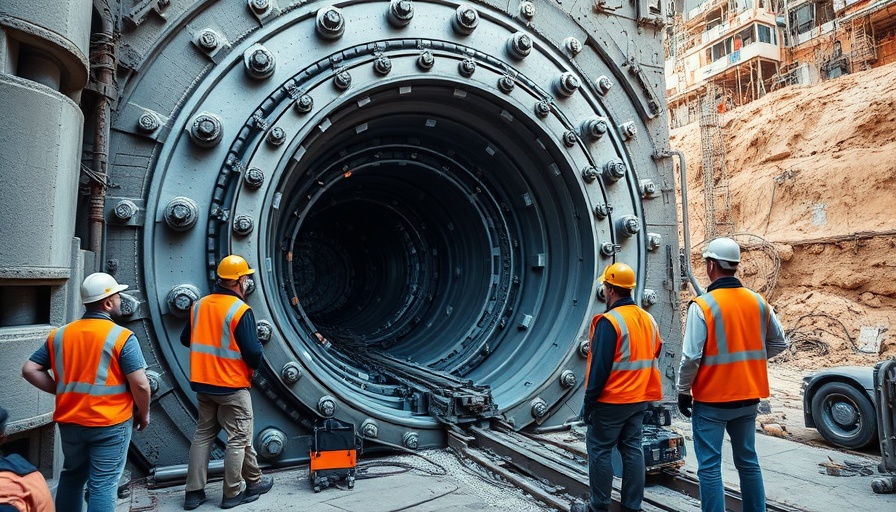
Birmingham HS2 tunnel breakthrough with expansive machinery and workers.

HS2 Achieves Historic Milestone with Birmingham Tunnel Completion

HS2, the highly anticipated high-speed railway project in the UK, has reached a significant construction milestone with the successful completion of the first Birmingham tunnel section. This breakthrough, marked by the giant tunnel boring machine (TBM) Mary Ann, signifies the completion of a critical 3.5-mile segment of the Bromford Tunnel.

The Journey of the TBM Mary Ann

Launched in July 2023, Mary Ann has gone through a monumental 652-day journey beneath vital infrastructure such as the M6 motorway and the River Tame. Operated by Balfour Beatty Vinci, a skilled team of 450 tunnellers worked tirelessly to guide the 1,600-ton machine through challenging ground conditions up to 40 meters deep. Mary Ann achieved remarkable progress, boring up to 30 meters a day while laying approximately 3,000 concrete rings cast from segments produced at BBV’s Avonmouth factory.

The Impact on the West Midlands

As HS2 Chief Executive Mark Wild noted, this breakthrough is not just a vital achievement for the project, but it also positions Washwood Heath as a central hub for the entire HS2 network. This area is set to house the HS2 train depot and the Network Integrated Control Centre, further fueling a transformation that involves a comprehensive £10 billion investment in the West Midlands. So far, HS2 has created more than 10,000 jobs in the region, including nearly 710 apprenticeships and opportunities for 1,870 previously unemployed individuals. Additionally, over 400 local businesses are now actively supplying materials or services to the undertaking.

Environmental Considerations and Innovation

In an impressive display of sustainability, HS2 has reused approximately one million tonnes of spoil from the tunnelling process for construction at the Delta Junction viaduct. This not only minimizes waste but reduces the number of truck movements required for transporting materials. Such innovations exemplify HS2's commitment to being an environmentally responsible project.

Future Developments Within the HS2 Project

While the Mary Ann TBM has marked a significant accomplishment, work continues with the second TBM, Elizabeth, currently advancing through the parallel bore, expected to complete later this year. The progression of this project signifies the enduring spirit of innovation within the construction industry, showcasing how both technology and human capability can achieve monumental tasks.

Concluding Thoughts

The completion of the Birmingham tunnel's first section represents more than just a construction milestone; it embodies the potential for growth and job creation in the region while focusing on innovation and sustainability. As HS2 continues to develop, industry professionals should consider this project not just a transportation upgrade but a beacon of ambitious construction and environmental responsibility.

Tech Innovations

19 Views

0 Comments

Write A Comment

*
*
Please complete the captcha to submit your comment.
Related Posts All Posts
05.14.2026

Despite Construction Spending Decline, Data Centers Thrive Amid Economic Pressure

Update Construction Spending Slowdown: The Wider Picture In March 2026, a concerning trend emerged in the construction sector, with nonresidential construction spending slipping by 0.2%. This decline has obscured the persistent growth in an otherwise booming sector: data center construction. According to Anirban Basu, the chief economist at ABC, the overall decline reflects a troubling national trend that's affecting both public and private sector projects. Falling spending has been noted broadly, especially in manufacturing-related constructions, signaling a wider malaise across the industry. Data Centers Defy the Trend While many construction segments are struggling, the data center sector remains an outlier, experiencing a remarkable year-over-year growth of 34.3%. This surge is fueled by increasing demands for cloud services, cybersecurity, and artificial intelligence. As businesses ramp up their digital operations, the need for robust data infrastructure has risen accordingly. Even with the scramble in manufacturing projects and declines in other nonresidential areas, data centers continue to thrive, insistent on pushing forward amidst surrounding financial turmoil. Why are Data Centers Thriving? The growth of data centers isn’t merely a fleeting trend—it's a direct response to the global shift towards digital operations. Factors driving their construction include the urgent need for artificial intelligence capabilities, cloud computing, and enterprise data storage that necessitate advanced and expansive facilities. Therefore, a critical aspect of today’s construction landscape lies in understanding how this specific area can influence contractor strategies and workforce planning. Expert Insights on Contractor Optimism The positive outlook for data centers is not a mere fluke. Industry experts, including Macrina Wilkins of the AGC, assert that although many traditional nonresidential segments are lagging, optimism persists due to the resilience of data center projects. With the financial backing from tech innovators and increasing demand, opportunities for contractors engaged in data center construction are plentiful. The Softening of Broader Nonresidential Markets Despite the shining success of data centers, the larger narrative within the construction economy still suggests caution. The overall health of this industry is impacted by numerous factors—including a downturn in public funding and rising costs of materials. Importantly, while data center construction can serve as a stabilizing force, it alone isn't enough to uplift the entirety of the nonresidential market, especially when many sectors struggle to keep pace. Strategic Moves for Contractors As construction spending trends shift, both large and small contractors are encouraged to reposition themselves accordingly. Access to the booming data center market requires a keen understanding of its unique demands. Specialized knowledge in high-density electrical systems and advanced cooling configurations becomes imperative, making it critical for contractors to invest in relevant training programs and forge strategic partnerships in the tech space. The Economic Ripple Effect on Local Communities The rapid expansion of data center construction also holds potential ripple effects for local economies. With significant investments bringing jobs and new infrastructures, communities can enjoy the benefits of economic stimulation. Yet, while this is a positive development, it's necessary to ensure that investment also translates into broader community gain, not just for contractors but for local stakeholders as well. Conclusion: A Call to Action For contractors seeking to leverage the burgeoning data center market, proactive adaptation is necessary. This includes upskilling the workforce, establishing strong industry connections, and adapting project management strategies to align with new tech demands. As the landscape of construction evolves, those who respond effectively to these changes will find themselves at the forefront of the industry’s next chapter.

05.14.2026

Unlocking AI’s True Potential in Construction Requires Collective Efforts

Update Harnessing AI in Construction: A Collaborative Endeavor As the construction industry grapples with severe skilled labor shortages and supply chain woes, the integration of artificial intelligence (AI) offers promising solutions. The recent ENR FutureTech conference highlighted that embracing AI effectively requires not just advanced technology, but also a concerted effort toward collaboration and communication among stakeholders. Why Implementation Matters More Than Technology "95% of AI pilots fail to deliver value," remarked Alan Espinoza, founder of Reconstructive AI. He emphasized that merely introducing AI technologies into existing workflows isn't sufficient. Instead, companies must examine their workflows and the ecosystems in which they operate. Espinoza's insights underscore a pivotal notion: technologies like AI do not inherently resolve underlying inefficiencies; rather, they can magnify existing problems if proper frameworks are not in place. A Creative Approach to Problem-Solving Innovative strategies can facilitate this necessary change. With a creative twist, Espinoza integrated elements from role-playing games into collaborative sessions. By framing construction challenges as quests where project stakeholders don the roles of characters in a game, he fostered a sense of teamwork necessary for overcoming the industry's challenges. This approach promotes a dynamic environment where individuals feel engaged and invested in finding solutions. The Role of Data in AI Success Just as important as procedural changes is the management of data itself. David Letteer from Hensel Phelps argued that proper data governance is essential before AI agents can be successfully deployed. Without accurate and reliable data, the autonomy of AI agents—akin to that of a new employee—cannot be appropriately established. Therefore, organizations must prioritize the cleanliness and management of their data to fully unlock AI capabilities. Real-World Efficiencies with AI Case studies from the conference illustrated how AI and robotics are already creating efficiencies. For instance, the deployment of robots like Rosa and Mac by Rogers O'Brien has drastically reduced the number of hours workers spend documenting construction progress, saving between 10 to 60 hours daily. These robots automate tedious and repeatable tasks, allowing human workers to focus on more strategic activities. Conclusion: Building the Future Together Artificial intelligence and robotics can significantly enhance productivity in the construction industry, but achieving these benefits demands strategic planning and collaborative efforts. As industry professionals continue to navigate the complex landscape of new technologies, fostering a culture of teamwork, effective data management, and innovative problem-solving can pave the way for success. The wisdom garnered from the ENR FutureTech conference serves as a roadmap for organizations eager to embrace the future.

05.12.2026

How AECOM’s Investments in AI and Defense Lead to Profits

Update A Growing Power in Infrastructure Development AECOM, the Dallas-based infrastructure firm, is witnessing a remarkable profit boost attributed to its strategic investments in technology and a surge in defense spending. The company recently announced during its fiscal second-quarter earnings call that its high-tech sector, including advanced artificial intelligence (AI) solutions, has become one of its fastest-growing areas in the United States. The Role of AI in Securing Major Contracts During the earnings call, CEO Troy Rudd highlighted how AECOM's proprietary AI tools were instrumental in winning two significant contracts totaling nearly $1 billion. This embrace of technology stands out in AECOM's approach, as these AI solutions not only enhance project proposals but also create mechanisms to capture added value in client relations. As technology becomes increasingly integrated into project planning, Rudd noted an improved revenue opportunity, especially in markets like healthcare design where AECOM previously had limited involvement. Power and Water: Key Drivers of Demand AECOM's president, Lara Poloni, emphasized that the demand for infrastructure in power and water sectors continues to rise. The firm has positioned itself at the forefront of emerging domains, such as nuclear fusion, which could yield substantial net service revenue in the upcoming years through collaborations with organizations like Type One Energy and the Tennessee Valley Authority. The company is capitalizing on these developments and expects solid growth from its high-tech operations in the infrastructure space. Defense Spending: A Major Catalyst In addition to its advancements in technology, AECOM is also benefiting from increased government spending on defense. The firm's pipeline with the U.S. Department of Defense, its largest client, has skyrocketed by 50%. This expansion aligns with a global uptick in military investment, positioning AECOM for significant revenue opportunities in government contracts as geopolitical tensions rise. Challenges and Recovery Signs in the Middle East Despite the positive trajectory, AECOM faced challenges due to geopolitical instability in the Middle East, which affected revenue growth and delayed project payments. However, Rudd suggested recovery signs are evident as collections in the region have started to rebound. This improvement could aid in forecasting stronger growth rates in the near future. Financial Performance: A Positive Outlook In its recent report, AECOM announced profits of $179.86 million for the second fiscal quarter, reflecting a 25.4% increase from the previous year. Revenue also saw a slight uptick to $3.8 billion. Additionally, the backlog reached $26.2 billion, an 8% increase from the prior year, indicating that AECOM’s strategic initiatives are yielding tangible results. Financial analysts, like Andrew Wittmann from Baird, have praised the company’s results as they suggest steady performance and growth potential moving forward. What Lies Ahead for AECOM? As AECOM continues to harness the power of technology and capitalize on defense spending, the potential for growth appears strong. The firm is not only expanding its portfolio in traditional infrastructure sectors but also carving out niches in emerging technologies and defense contracts that could define its future. With the prospect of unspent government infrastructure funding still available, AECOM has a clear path for sustained growth, even in the face of economic uncertainties. In conclusion, AECOM is a prime example of how strategic investment in technology, paired with increased government spending, can drive robust financial growth in today's competitive landscape. This trend not only highlights the evolving nature of infrastructure development but also the potential for significantly improved margins and new opportunities across various sectors.

Terms of Service

Privacy Policy

Core Modal Title

Sorry, no results found

You Might Find These Articles Interesting

T
Please Check Your Email
We Will Be Following Up Shortly
*
*
*