
cropper
update
BUILDING SECTOR INSIGHT'S
update
  • Home
  • Categories
    • Industry Trends
    • Tech Innovations
    • Expert Talks
  • Featured Business Profiles
August 26.2025
3 Minutes Read

How Will Changes in EU Cigarette Taxes Affect Small Businesses?

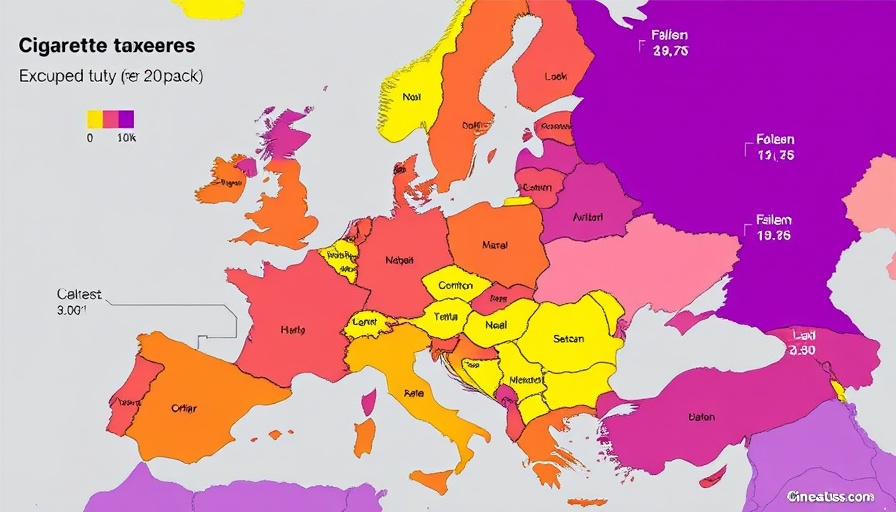
Map of cigarette taxes in Europe 2025 showing variation across countries

Understanding Cigarette Taxes in the EU: Why They're So High

Cigarette smokers across Europe are increasingly aware of the heavy burden imposed by excise taxes on tobacco products. Not only do these taxes significantly inflate the retail price of cigarettes, but they often exceed the cost of the cigarettes themselves. According to the EU Tobacco Tax Directive, each Member State must impose a minimum excise tax on cigarettes, which comprises two components: specific ad quantum taxes and ad valorem taxes based on the retail price.

The Current Landscape of Excise Taxes in 2025

In 2025, the minimum excise tax within the EU remains at €1.80 ($2.12) per pack of 20 cigarettes, adhering to standards that have not been updated since 2014. Additionally, all Member States must ensure that the total excise duty equates to at least 60% of the national weighted average retail price. However, some nations opt for a specific rate higher than €2.30 per pack, exempting them from the 60% rule, leading to diverse tax structures.

Diversity Across Member States: A Closer Look

A noticeable disparity exists in cigarette excise tax rates across EU nations. For instance, Ireland imposes the steepest tax at €10.71 ($12.64) per pack, making it the most expensive place for smokers. Following closely are France and the Netherlands, with respective taxes of €8.09 ($9.55) and €7.77 ($9.17). This stark contrast, juxtaposed with Bulgaria, which levies scant taxes of just €2.03 ($2.39), highlights the variance in governmental approaches to tobacco regulation.

How Excise Taxes Affect Small to Medium Businesses

For small and medium businesses, particularly those in the tobacco industry or selling consumer goods, understanding these tax frameworks is crucial. Tax burden affects pricing strategies, consumer behaviour, and ultimately the bottom line. Higher taxes may deter customers, forcing businesses to adapt their marketing approaches or reconsider product offerings. Furthermore, compliance with various tax rules across different EU countries can complicate operational logistics, particularly for those engaged in cross-border trade.

Future Predictions: What Changes May Come?

As the EU prepares to update the Tobacco Tax Directive, the landscape of cigarette taxation may shift significantly. Experts anticipate potential increases in minimum tax rates as a part of broader health initiatives aimed at reducing smoking rates. Businesses should brace for these adjustments and consider proactive strategies to cope with potential consumer backlash against price increases.

Counterarguments: The Debate on Tobacco Taxation

While many argue that high cigarette taxes discourage smoking, thus enhancing public health, opponents point to the economic implications of such policies. Some sectors argue that excessive taxation can lead to a black market for tobacco products, circumventing government revenue and safety regulations. Finding a balance between discouraging harmful habits and supporting legitimate businesses remains a contentious point of discussion.

Conclusion: Mindful Decisions for Business Planning

As these dynamics unfold, CPAs and small to medium businesses operating within or alongside these tax frameworks must remain informed and adaptable. Understanding the intricacies of excise taxes in the EU can position these businesses to navigate the implications effectively. The landscape of tobacco taxation is likely to evolve—strategizing in advance can mitigate adverse effects and capitalize on opportunities.

Stay informed about the potential changes in tobacco tax regulations across the EU. Educating yourself on upcoming adjustments enables businesses to make informed decisions that can affect pricing, consumer engagement, and overall operations.

Expert Talks

10 Views

0 Comments

Write A Comment

*
*
Please complete the captcha to submit your comment.
Related Posts All Posts
05.23.2026

Navigating the Complex World of Distilled Spirits Taxes for 2026

Update Understanding Distilled Spirits Taxes: An Overview The landscape of distilled spirits taxation is complex, shaped by a variety of regulations that vary significantly from state to state. As of 2026, distilled spirits are witnessing an impressive market share in American alcohol sales, commanding a staggering 42.4%, which has been on the rise over the past two decades. This increase is driven largely by innovative products such as ready-to-drink cocktails and hard seltzers, which have begun to blur the lines of traditional alcohol categories and their associated tax frameworks. The Current Tax Structure Across States Distilled spirits face the highest tax burdens among alcoholic beverages. For instance, Washington stands out with an astonishing excise tax of $36.68 per gallon, significantly higher than Oregon and Virginia, which impose taxes of $23.74 and $23.47 respectively. In contrast, Wyoming and New Hampshire impose no excise tax at all, illustrating a stark disparity in taxation that reflects local policy priorities and their impacts on consumer behavior and market dynamics. Implications for Small Businesses and CPAs For CPAs and small to medium-sized businesses in the spirits industry, understanding the variance in taxes is critical for future planning and compliance. The confusion often triggers calls for reform in the tax policies that attach different rates to varying types of alcohol. A more unified and alcohol-content-focused tax system could not only simplify the existing framework but also foster healthier competition among different types of beverages. Tax Burdens and Consumer Price The impact of taxes on distilled spirits is significant; nearly half the retail price of a bottle is attributable to various federal, state, and local taxes. Such high effective tax rates can incentivize consumers to seek alternatives like cross-border purchases, particularly from lower-tax states, which further complicates the financial landscape for businesses operating in high-tax environments. Future Trends and Policy Reform The ongoing evolution in consumer preferences poses both challenges and opportunities for spirits taxation. As younger demographics show a tendency to drink less alcohol, and with emerging products continuously reshaping the spirits market, policymakers need to adapt their tax structures accordingly. Calls for modernization, emphasizing neutral tax treatment based on alcohol content, are crucial to meet the industry's future needs while addressing responsible consumption standards. Conclusion: The Importance of Staying Informed For CPAs and small business owners, comprehending the landscape of distilled spirits taxes and the potential for future reforms is paramount. Using this understanding, businesses can navigate the complex tax landscape more effectively, ensuring compliance and fostering sustainable growth. Engage with policymakers or industry groups to advocate for reforms that will benefit both the industry and general public consumption practices.

05.22.2026

Why Competitive Corporate Tax Policy is Key for European Economic Growth

Update Understanding the Imperative of Competitive Corporate Tax Policy In a world increasingly characterized by geopolitical rivalries and economic uncertainties, competitive corporate tax policy is not merely a financial strategy; it's a fundamental necessity for safeguarding Europe's economic future. Policymakers across the continent now face pressing challenges: stagnant GDP growth forecasts and rising fiscal deficits that could threaten the region's economic stability. Setting the Stage for Growth The European environment for business has become complicated by diverging economic performance compared to other global regions. Forecasts from the European Commission suggest a modest GDP growth of around 1.4% in 2026, significantly lagging behind North America and Asia-Pacific. This disparity underscores the urgency of mobilizing investment and fostering innovation as Europe seeks to compete internationally. The long-standing strategy of discussing mere tax rates without addressing broader structural tax system improvements hinders these goals. As noted in discussions around the International Tax Competitiveness Index (ITCI), a well-structured corporate tax system that truly supports economic growth encompasses much more than just the statutory tax rate—it includes the tax base, neutrality, complexity, and investment treatment. The Role of Tax Harmonization in Economic Recovery Tax harmonization has often been a contentious topic within the EU, with member states reluctant to surrender fiscal sovereignty. However, a fluid business environment requires reducing transaction costs and minimizing friction resulting from differing tax policies. Such harmonization can foster an atmosphere conducive to investment and innovation, which will be pivotal for the recovery and expansion of the EU economy. As Grant Thornton highlights in its analysis of EU tax policy, the need for fair and efficient tax frameworks has never been more vital. By facilitating a streamlined taxation process across member states, businesses can better predict obligations and secure investor confidence, essential for economic revitalization. Innovative Solutions Amidst Challenges A pivotal question arises: how can the EU cultivate a competitive corporate tax landscape in the face of rising global tensions? The recent G7 agreement on a global minimum tax presents both a challenge and an opportunity. It raises concerns about remaining attractive to businesses if European tax burdens increase while American and other foreign competitors enjoy more favorable conditions. Immediate steps towards establishing Corporate Tax 2.0, which presents tax frameworks emphasizing simplicity and neutrality, could ensure that Europe does not fall behind. Despite resistance from individual nations previously failing to adopt harmonization efforts, the clear path to a unified tax model appears critical. If successfully implemented, Corporate Tax 2.0 would embody a progressive shift towards modernizing taxation in alignment with innovation and sustainable growth. The Business Community’s Influence With calls growing loudest from businesses themselves, there’s a unique opportunity for CPA groups and small to medium enterprises (SMEs) to advocate for tax reforms beneficial for economic growth. The hybrid of collaboration between the business sector and policymakers could be instrumental in shaping a conducive regulatory environment. SMEs often drive job creation and innovation and need adequate frameworks to thrive. By engaging with local representatives and voicing their needs and challenges, businesses can employ their influence to ensure that the tax policies proposed are not only equitable but also stimulate growth and sustainability. Active participation in tax discussions will pave the way for systemic changes tailored to foster long-term stability and regulatory efficiency. Decisions for the Future: Call to Action In conclusion, the future of Europe's economic prosperity hinges on its ability to adapt and innovate within its corporate tax landscape. It’s time for businesses and financial professionals alike to engage deeply in these discussions and advocate for strategic reforms that promote growth rather than stifle it. The success of Europe on the global stage relies on unity and engagement towards a competitive corporate tax environment that supports economic resilience and growth.

05.20.2026

Understanding the Existing Windfall Profits Tax: The Corporate Income Tax Breakdown

Update The Current Landscape of Oil Profits and Taxation The recent surge in global oil prices due to geopolitical tensions, particularly around the Strait of Hormuz, has reignited the debate over windfall profits taxes on oil and gas producers. With proposals being introduced in Congress, it's crucial to examine how these measures interact with existing taxation structures, notably, the corporate income tax (CIT). Understanding Windfall Profits Taxes Windfall profits taxes are designed to target unexpected, high profits that companies earn during crises or market volatility. Senators Sheldon Whitehouse and Representative Ro Khanna have proposed a new Big Oil Windfall Profits Tax Act that would capture these excess gains by taxing crude oil sales at a substantial rate. However, what is often overlooked is that corporations, particularly oil companies, already pay significant amounts through the CIT, which taxes profits proportionally. Thus, as oil prices soar, so too do the taxes these companies owe. The Corporate Income Tax: A Pre-existing Windfall Tax In the United States, the corporate income tax structure inherently taxes profits during high-cost periods, meaning companies already contribute to federal revenue when they experience high revenues. During fiscal years marked by increased prices, businesses see their tax liabilities rise automatically as these taxes are based on their earnings. This poses an important question: Do we need an additional layer of taxation when there is already a system in play that captures these profits? Dangers of Permanent Taxation on Investments One key Issue with proposals for windfall taxes is their permanence. Recent history demonstrates that temporary measures can often morph into lasting taxes. This prospect raises alarms about the potential dampening effect on future investments in both fossil fuels and renewable sectors. If companies anticipate a consistent claim on their high revenues through windfall taxes, their willingness to invest in production may decrease. Learning from Past Experiences The case of European nations implementing windfall taxes after the 2022 oil price spike yielded disappointing results. Not only did these taxes fail to generate substantial revenue, but they also disrupted investments in the energy sector across the board. Spain's windfall profits tax particularly harmed clean energy investments, as major energy firms typically operate across both fossil and renewable fuel sectors. Inflation Threats and Economic Equations The volatility of the oil market underscores how sensitive investment decisions are to expected returns. When the government is perceived as likely to claim a more significant share of profits during high-price years, potential ROI for investors shrinks. This perception leads to reduced capital investment in new oil production capacity. Policymakers must weigh these considerations carefully when proposing new taxes. Connecting the Dots: Corporate Tax and Windfall Gains For CPAs and small to medium businesses, understanding the relationship between corporate taxation and windfall profits is vital. The CIT already extracts revenues equivalent to those targeted by proposed windfall taxes, and maintaining clarity on this issue may prevent unnecessary legislative additions that could complicate the tax landscape further. The Big Picture: Planning for Future Investments Ultimately, the key takeaway for small and medium businesses, particularly in the energy sector, is the importance of long-term planning. Companies must navigate a complex taxation landscape while remaining nimble in a market characterized by fluctuations. By advocating for refined approaches to taxation rather than new taxes, businesses can better prepare for changes and position themselves advantageously in an evolving economic climate.

Terms of Service

Privacy Policy

Core Modal Title

Sorry, no results found

You Might Find These Articles Interesting

T
Please Check Your Email
We Will Be Following Up Shortly
*
*
*